

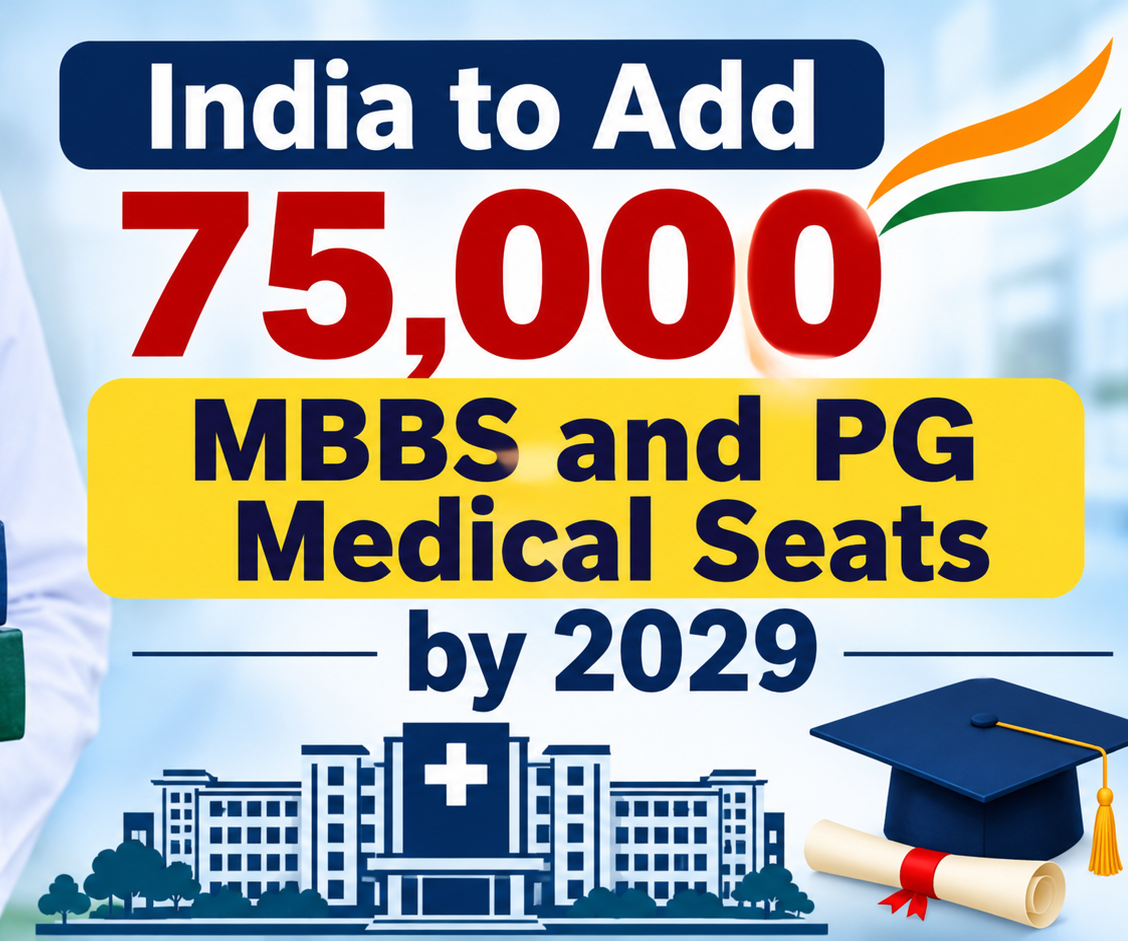
Union Health Minister JP Nadda reiterated the government's ambitious target while highlighting the remarkable growth in India's medical education infrastructure over the past decade. The expansion initiative aims to increase opportunities for aspiring doctors, strengthen the availability of specialist medical professionals and improve access to quality healthcare services across the country.
The proposed addition of 75,000 medical seats is particularly important for students preparing for NEET UG and NEET PG examinations. With more undergraduate and postgraduate opportunities expected in the coming years, the initiative could help address the growing demand for medical education in India.
India Targets 75,000 Additional Medical Seats by 2029
The government has reaffirmed its commitment to creating 75,000 additional medical seats by 2029, covering both undergraduate and postgraduate medical education.
The initiative is part of the broader national strategy to strengthen healthcare infrastructure and increase the availability of qualified doctors and medical specialists. Prime Minister Narendra Modi had earlier announced the objective of expanding medical education capacity, and the Health Minister has expressed confidence that the target will be achieved within the stipulated timeline.
According to JP Nadda, India has already made substantial progress in expanding medical education facilities. The number of medical colleges has increased considerably, while the availability of MBBS and postgraduate seats has also witnessed significant growth.
The expansion is expected to benefit students seeking admission to MBBS programmes as well as doctors aspiring to pursue postgraduate specialisations such as MD, MS and other advanced medical courses.
Medical Colleges in India Increase from 387 to 863
Highlighting the transformation of India's medical education sector, JP Nadda stated that the number of medical colleges in the country has increased from 387 to 863.
This represents substantial growth in the country's medical education network over the past decade. The expansion of existing institutions, establishment of new medical colleges and strengthening of healthcare infrastructure have contributed to the increase in available medical education opportunities.
The number of All India Institutes of Medical Sciences (AIIMS) has also increased significantly. India, which had only one AIIMS institution towards the end of the 20th century, now has 23 AIIMS institutions.
The growing network of medical colleges and AIIMS institutions is expected to play an important role in improving medical education, research, clinical training and healthcare delivery.
MBBS Seats Increase from 51,000 to 1.43 Lakh
One of the most significant developments highlighted by the Health Minister is the substantial increase in undergraduate medical seats.
India's MBBS seat capacity has increased from approximately 51,000 to 1.43 lakh over the past decade. This growth has expanded opportunities for students seeking admission through the National Eligibility cum Entrance Test Undergraduate (NEET UG).
The increase in MBBS seats is particularly important considering the consistently high number of candidates appearing for NEET UG every year. With medical education remaining one of the most competitive career choices in India, additional seats can help more eligible students secure admission to recognised medical institutions.
The government intends to continue expanding undergraduate medical education capacity through new institutions and the upgradation of existing government medical colleges.
Postgraduate Medical Seats Rise from 31,000 to 91,000
Alongside undergraduate medical education, India has also witnessed considerable growth in postgraduate medical seat availability.
According to the Health Minister's latest statement, postgraduate medical seats have increased from approximately 31,000 to 91,000.
The expansion of postgraduate capacity is particularly important for MBBS graduates who wish to pursue specialised medical training. Postgraduate courses such as Doctor of Medicine (MD), Master of Surgery (MS) and other recognised specialist programmes provide doctors with advanced clinical knowledge and professional expertise.
Increasing the number of PG medical seats can help address the shortage of specialist doctors in different medical disciplines. It may also improve admission opportunities for doctors appearing in NEET PG and participating in national and state-level postgraduate counselling.
However, the actual availability of seats for admission will depend on institutional readiness, regulatory approval and the publication of the relevant official seat matrices.
₹15,000 Crore Investment to Support Medical Seat Expansion
A significant component of the government's medical education expansion strategy is its financial commitment towards strengthening existing government medical institutions.
The Union Cabinet approved a financial assistance framework of approximately ₹15,000 crore to support the creation of 10,000 additional undergraduate and postgraduate medical seats.
Under the approved framework, financial assistance of up to ₹1.5 crore per additional medical seat has been provided for eligible institutions, subject to the applicable scheme conditions.
The initiative is designed to strengthen infrastructure and improve the capacity of government medical colleges and institutions to accommodate additional students.
The financial support is expected to facilitate improvements in teaching facilities, laboratories, clinical infrastructure, hospital facilities and other essential resources required for medical education.
The investment is also intended to support the availability of specialist medical training facilities and improve the overall quality of medical education.
Government's Existing Scheme to Add 10,023 Medical Seats
The Union Cabinet had earlier approved the expansion of undergraduate and postgraduate medical education capacity through Centrally Sponsored Schemes.
Under the approved initiative, the government aims to add:
- 5,000 postgraduate medical seats through the upgradation of existing government medical colleges, standalone postgraduate institutions and government hospitals.
- 5,023 undergraduate MBBS seats through the upgradation of existing government medical colleges.
The scheme has a total financial implication of approximately ₹15,034.50 crore for the period from 2025-26 to 2028-29.
The initiative is intended to strengthen medical education infrastructure by making better use of existing government institutions. It also seeks to improve the availability of medical specialists and promote the introduction of additional medical specialities.
The scheme is particularly relevant for states and regions where medical education infrastructure and specialist healthcare facilities require further strengthening.
It is important to distinguish this specific scheme target of 10,023 seats from the broader national commitment to add 75,000 medical seats by 2029. The two figures represent different levels of the government's expansion strategy.
How Will the Expansion Benefit NEET UG Aspirants?
The proposed increase in medical seats is expected to create additional opportunities for students aspiring to pursue MBBS courses.
NEET UG remains the national entrance examination for admission to undergraduate medical programmes in India. Every year, lakhs of candidates compete for a limited number of seats in government and private medical colleges.
An increase in MBBS seats could provide several benefits to aspiring medical students:
1. More MBBS Admission Opportunities: Additional seats can increase the number of available options during NEET UG counselling.
2. Expansion of Government Medical Colleges: Upgradation of existing institutions and the development of new facilities can strengthen the availability of government medical education.
3. Improved Regional Accessibility: Expanding medical colleges across different states can help students access medical education closer to their home regions.
4. Greater Institutional Choices: A larger medical education network can provide students with more options while selecting colleges during counselling.
5. Strengthening the Healthcare Workforce: More MBBS graduates can contribute to improving the availability of qualified doctors across the country.
Nevertheless, the increase in seats does not automatically guarantee admission to every NEET UG candidate. Admission will continue to depend on NEET performance, eligibility requirements, reservation policies, counselling procedures and the availability of approved seats.
What Does the Expansion Mean for NEET PG Aspirants?
The proposed increase in postgraduate medical seats is equally significant for MBBS graduates preparing for NEET PG.
Postgraduate medical education is essential for developing specialists in areas such as General Medicine, General Surgery, Paediatrics, Obstetrics and Gynaecology, Radiodiagnosis, Anaesthesiology, Orthopaedics and other clinical and non-clinical disciplines.
The increase in PG medical seats could help improve opportunities for doctors seeking admission to MD, MS and other recognised postgraduate programmes.
Additional postgraduate capacity may also help address the uneven distribution of specialists across different parts of India.
For NEET PG aspirants, the expansion could result in a wider range of admission opportunities in the coming years. However, candidates should remember that seat additions will become available for counselling only after the concerned institutions and courses receive the necessary regulatory approvals.
Focus on Quality Alongside Expansion of Medical Education
While increasing the number of medical seats remains an important national priority, maintaining the quality of medical education is equally essential.
JP Nadda emphasised that the expansion of medical education must not compromise academic and institutional standards.
Medical education requires well-equipped laboratories, adequate faculty members, modern teaching facilities, sufficient clinical exposure and access to functioning hospitals. Simply increasing the number of seats without strengthening these essential resources could affect the quality of medical training.
The National Medical Commission (NMC), India's principal regulatory authority for medical education, plays an important role in ensuring that medical colleges meet prescribed standards.
Regulatory frameworks, including the Minimum Standard Requirements, Graduate Medical Education Regulations 2023, Maintenance of Standards of Medical Education Regulations 2023 and Competency-Based Medical Education curriculum guidelines, are intended to support the quality and standardisation of medical education.
The government is therefore focusing on expanding capacity while ensuring that institutions have the infrastructure, faculty and clinical facilities required to provide effective medical training.
Strengthening Healthcare Infrastructure Across India
The expansion of medical education is expected to contribute to the broader objective of strengthening India's healthcare system.
The availability of an adequate number of doctors and specialists is essential for delivering quality healthcare, particularly in rural, remote and underserved regions.
Several parts of the country continue to face challenges related to the availability of specialist doctors and advanced medical facilities. Increasing the number of medical colleges and postgraduate training opportunities could help address some of these gaps over time.
The expansion of medical institutions may also generate employment opportunities for medical faculty, healthcare professionals, researchers, nurses, paramedical staff, administrators and other support personnel.
Furthermore, strengthening medical education infrastructure can contribute to medical research, innovation and the development of specialised healthcare services.
What Should Medical Aspirants Expect in the Coming Years?
The government's target of adding 75,000 medical seats by 2029 represents an important development for India's medical education sector.
For NEET UG aspirants, the expansion could provide more MBBS admission opportunities. For NEET PG candidates, additional postgraduate seats could improve the availability of specialist training programmes.
However, the implementation of the expansion plan will take place progressively. Students should not assume that all proposed seats will become available immediately or in a particular counselling year.
Aspirants should regularly monitor official announcements from the National Medical Commission, Medical Counselling Committee (MCC), National Testing Agency (NTA), Ministry of Health and Family Welfare and respective state counselling authorities.
The official seat matrix released for each admission cycle will remain the most reliable source for confirming the actual number of available MBBS and postgraduate medical seats.
Conclusion
India's commitment to adding 75,000 undergraduate and postgraduate medical seats by 2029 marks a major step towards expanding the country's medical education capacity. With the number of medical colleges increasing from 387 to 863, AIIMS institutions rising to 23, MBBS seats reaching approximately 1.43 lakh and postgraduate seats increasing to around 91,000, the country has made considerable progress in strengthening its medical education infrastructure.
The additional financial support of approximately ₹15,000 crore for creating 10,000 medical seats, along with the approved schemes targeting 10,023 additional MBBS and PG seats, further highlights the government's focus on expanding institutional capacity.
For medical aspirants, the proposed expansion offers encouraging prospects for the coming years. However, ensuring adequate faculty, infrastructure, clinical exposure and regulatory compliance will be crucial to making this expansion successful.
The real impact of the initiative will ultimately depend not only on the number of seats created but also on the quality of doctors and specialists trained to serve India's growing healthcare needs.
